
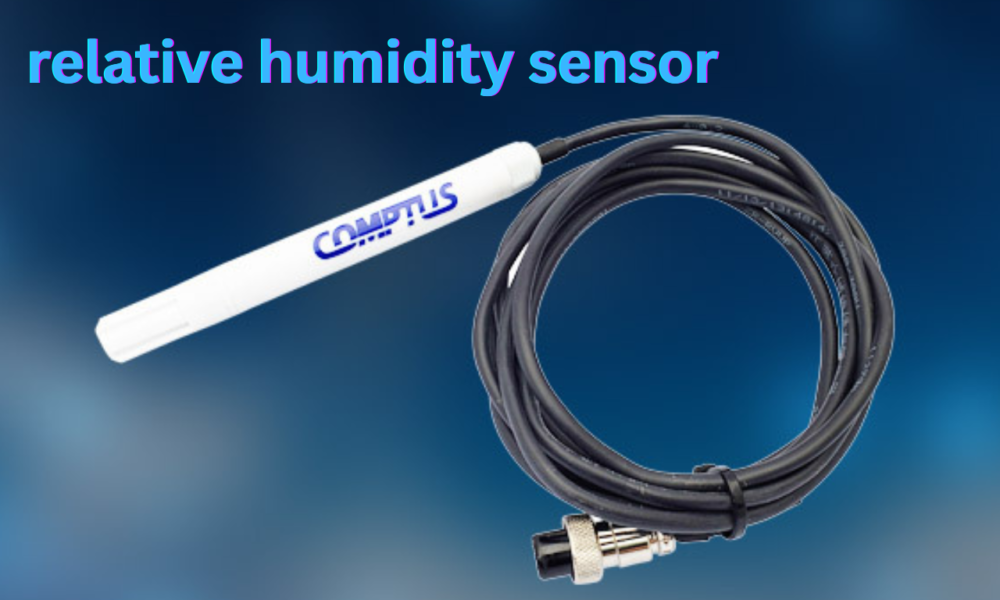
In the modern world, technology is deeply integrated into our daily lives, from smartphones and smart homes to industrial automation and environmental monitoring. One essential yet often overlooked component that plays a vital role in both consumer and industrial applications is the relative humidity sensor. These devices are responsible for detecting and reporting the level of humidity in the air, ensuring everything from comfortable living conditions to optimized industrial processes.
Understanding humidity levels is crucial for sectors like agriculture, healthcare, HVAC (heating, ventilation, and air conditioning), and even electronics manufacturing. Without accurate humidity monitoring, crops can fail, medicines can lose effectiveness, and sensitive electronic components can be damaged. This is where relative humidity sensors come into play.
This guide will take you through everything you need to know about relative humidity sensors: what they are, how they work, their types, applications, and future trends. By the end of this article, you’ll have a thorough understanding of why these devices are so important in today’s world.
What is a Relative Humidity Sensor
A relative humidity sensor is a device designed to measure the amount of water vapor present in the air compared to the maximum amount of vapor the air can hold at a given temperature. This measurement is expressed as a percentage and referred to as relative humidity (RH).
For example, if the relative humidity is 50%, it means the air contains half the amount of water vapor it could hold at that temperature before becoming saturated. These sensors provide essential data that help regulate environments for comfort, safety, and efficiency.
How Does a Relative Humidity Sensor Work?
Relative humidity sensors work on principles of electrical and physical changes caused by water vapor. The two most common mechanisms are:
1. Capacitive Sensing
- A thin film of hygroscopic material (a material that absorbs moisture) is sandwiched between two electrodes.
- As humidity changes, the dielectric constant of the material changes.
- This results in variations in capacitance, which can be measured and converted into relative humidity levels.
2. Resistive Sensing
- A conductive polymer or salt-coated substrate changes its resistance as it absorbs moisture.
- The electrical resistance decreases as humidity increases.
- The sensor’s electronics translate these changes into humidity readings.
Both methods are widely used, with capacitive sensors being more common due to their stability, accuracy, and durability.
Types of Relative Humidity Sensors
Capacitive Humidity Sensors
- Most widely used in commercial and industrial applications.
- Provide high accuracy and long-term stability.
- Suitable for harsh environments and broad humidity ranges.
Resistive Humidity Sensors
- Simple and cost-effective.
- Ideal for consumer electronics and basic humidity monitoring needs.
- May have limitations in extreme conditions.
Thermal Conductivity Sensors
- Measure absolute humidity instead of relative humidity.
- Suitable for specialized industrial applications.
- Less common in everyday devices.
Applications of Relative Humidity Sensors
HVAC Systems
Relative humidity sensors are crucial in heating, ventilation, and air conditioning systems. They maintain indoor air quality, prevent mold growth, and ensure energy efficiency.
Agriculture and Greenhouses
Farmers rely on these sensors to maintain the right environment for crops. In greenhouses, controlling humidity ensures optimal growth conditions and prevents plant diseases.
Healthcare and Pharmaceuticals
Medicines, vaccines, and medical equipment require strict humidity control. Relative humidity sensors guarantee that sensitive items are stored under safe conditions.
Consumer Electronics
From smartphones to wearable devices, humidity sensors protect sensitive circuits and provide comfort-based features, such as weather forecasting.
Industrial Processes
Manufacturing industries—especially those working with food, textiles, or chemicals—depend on precise humidity monitoring to ensure product quality and consistency.
Advantages of Using a Relative Humidity Sensor
- Accuracy: Provides precise measurements to maintain controlled environments.
- Energy Efficiency: Helps HVAC systems optimize energy usage.
- Versatility: Suitable for both consumer and industrial applications.
- Durability: Many sensors can operate in extreme conditions.
- Integration: Easily combined with IoT (Internet of Things) systems for smart monitoring.
Challenges in Humidity Measurement
While relative humidity sensors are highly effective, they also face some challenges:
- Calibration Drift: Sensors may lose accuracy over time.
- Condensation Issues: Excess moisture can damage certain types of sensors.
- Temperature Dependence: Some sensors’ accuracy is affected by rapid temperature fluctuations.
- Maintenance Requirements: In harsh environments, frequent recalibration may be needed.
Innovations in Relative Humidity Sensors
With advancements in nanotechnology and smart electronics, relative humidity sensors are becoming smaller, faster, and more accurate. Recent innovations include:
- MEMS-Based Sensors: Micro-Electro-Mechanical Systems (MEMS) allow for compact designs ideal for smartphones and IoT devices.
- Wireless Connectivity: Sensors with Wi-Fi or Bluetooth capabilities enable remote monitoring.
- AI Integration: Artificial intelligence can analyze sensor data for predictive maintenance and environmental forecasting.
Choosing the Right Relative Humidity Sensor
When selecting a sensor, consider the following factors:
- Accuracy Requirements – High-precision industries like pharmaceuticals need highly accurate sensors.
- Operating Range – Ensure the sensor works within your required humidity and temperature ranges.
- Environment – Harsh conditions may require more durable sensors.
- Size and Form Factor – For portable or embedded applications, miniaturized sensors are preferable.
- Cost vs. Performance – Balance affordability with necessary features.
Future of Relative Humidity Sensors
The future looks promising, with growing integration in smart cities, wearable devices, and climate monitoring systems. As the world focuses more on sustainability and energy efficiency, relative humidity sensors will play a critical role in ensuring optimized living and working environments.
The rise of IoT-enabled sensors will allow real-time monitoring across industries, while AI-driven analytics will further enhance their usefulness. We can also expect continued miniaturization, making them even more suitable for everyday consumer devices.
FAQs About Relative Humidity Sensors
1. What is a relative humidity sensor used for?
A relative humidity sensor measures the moisture level in the air, providing essential data for HVAC systems, agriculture, healthcare, industrial processes, and consumer electronics.
2. How accurate are relative humidity sensors?
Most high-quality sensors offer accuracy within ±2% to ±5% RH. Accuracy depends on sensor type, design, and calibration.
3. Can a relative humidity sensor be used outdoors?
Yes, many sensors are designed for outdoor use, but they should be weatherproof and resistant to dust, rain, and extreme conditions.
4. Do relative humidity sensors need calibration?
Yes, over time, sensors may drift from their original accuracy and require recalibration to maintain performance.
5. What’s the difference between absolute humidity and relative humidity?
- Relative Humidity (RH): The percentage of water vapor in the air relative to the maximum it can hold at a specific temperature.
- Absolute Humidity: The actual mass of water vapor per cubic meter of air, independent of temperature.
Conclusion
A relative humidity sensor may be a small device, but it has a massive impact on industries, healthcare, agriculture, and daily life. From ensuring the efficiency of HVAC systems to protecting sensitive medical equipment and improving consumer electronics, these sensors quietly support modern living.
As technology continues to advance, we can expect even more intelligent, compact, and integrated humidity sensors to emerge, paving the way for smarter, healthier, and more sustainable environments.
By understanding what a relative humidity sensor is, how it works, and where it’s applied, individuals and industries alike can make better choices to optimize comfort, efficiency, and safety.